A calendar can reveal an uncomfortable fact: the resources you reasonably expect before a due date may not cover what is needed. That finding is useful even when it does not immediately solve the problem. It gives you a specific obligation, amount of uncertainty, and time window to discuss. The alternative is often a vague sense that the month will somehow work out.
First check the plan for simple mistakes. Did you count an expected reimbursement as money already available? Did you subtract the same bill twice? Did you overlook a confirmed resource or use last month’s amount for a changed bill? Correcting an error matters, but do not keep adjusting assumptions merely to erase a genuine shortfall from the page.
Identify the first consequential point
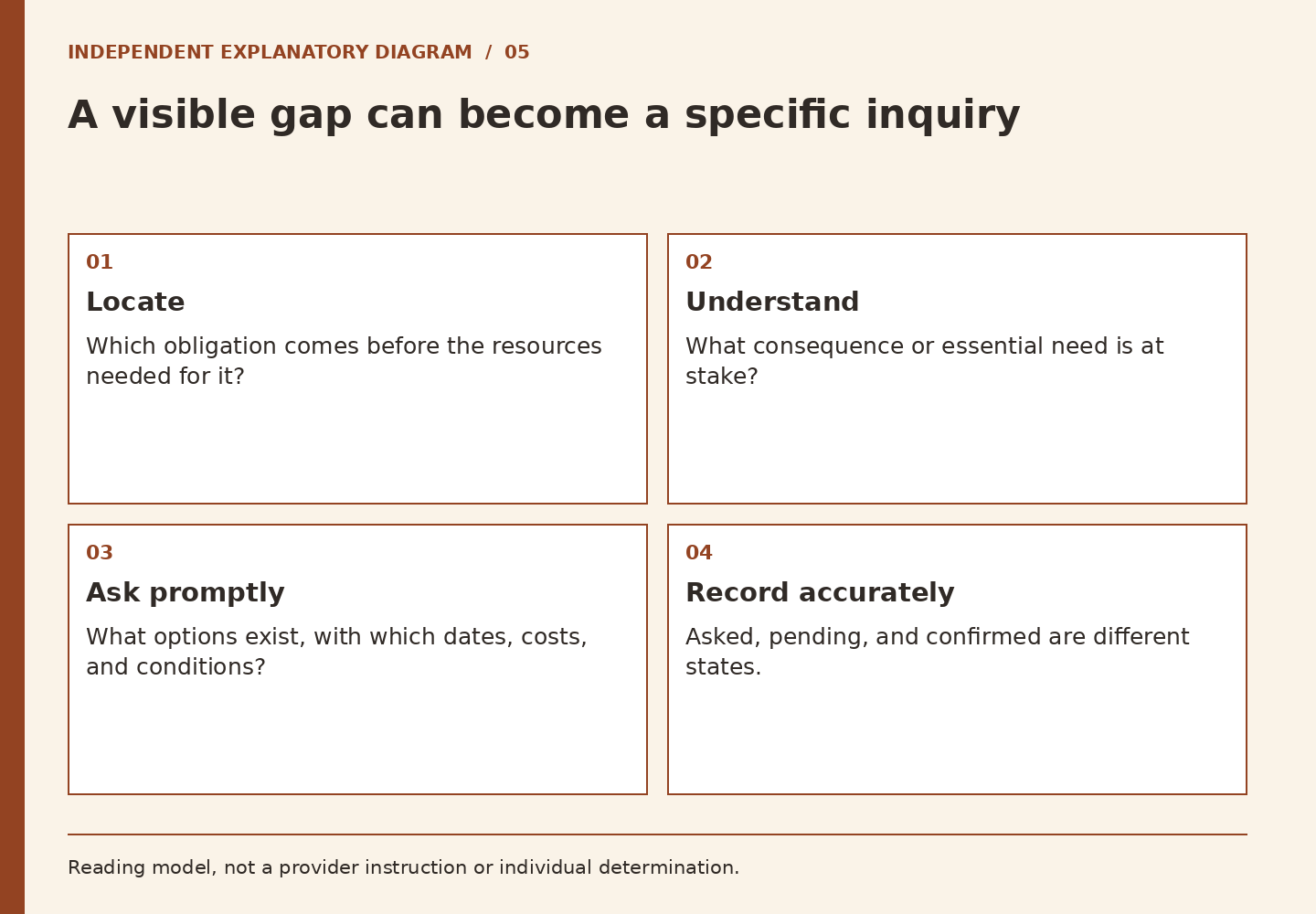
Find the earliest date at which the plan depends on money that is not currently available or reliably expected in time. Then name the practical consequence of the obligation going unmet. Housing, essential services, work transportation, and other responsibilities can carry different risks. This article does not rank everyone’s bills or tell you which payment to miss. Your circumstances and applicable terms matter.
In a fictional example, a household expects enough income over the full month but sees an essential bill due before the larger payment arrives. The calendar’s finding is a timing gap, not proof that the biller will move the date. A separate household may have a shortfall across the whole month. That second problem will not be solved merely by shifting dates around.
Ask for the option and its conditions
Contact the biller through a verified route promptly. Explain the specific issue and ask which options, if any, are available. Useful questions include when an arrangement would start, what remains due now, whether costs change, and how the agreement would be confirmed. An offered option should be understood before you accept it, particularly if it changes the total owed or creates a later obligation.
You can prepare a brief note before the conversation: “I am asking about this bill and due date. The timing problem is this. I need to understand the available arrangements and their consequences.” Keep private details limited to what the legitimate process requires. You do not need to provide your account information to this publication or its local reading aid.
Distinguish an inquiry from an agreement
After the contact, label the result accurately. “Asked,” “awaiting a decision,” and “confirmed arrangement” should remain separate. Record any next action and who is expected to take it. If the answer is unclear, ask again rather than treating silence as an extension. Until an authorized change is confirmed, the original obligation remains part of the plan.
If the problem involves possible wage errors, use the appropriate employer or official assistance channel. For lost cards, stolen PINs, or unauthorized transactions, contact the card provider promptly. A household shortfall conversation is not a substitute for those processes. Do not postpone an urgent report while waiting to complete a perfect monthly budget or gather every supporting detail.
Return to the calendar after any confirmed arrangement. Check whether it solves the identified gap or creates a new cluster later. If the household still cannot cover essential needs, seek suitable local assistance or qualified guidance through verified sources. The calendar has done its job when it makes the next real decision visible, including the need for help beyond a scheduling change.
Sources and reading boundaries
Sources checked October 7, 2026. This is a review date, not a policy effective date or an account test.
- CFPB: Prioritizing bills: General education on evaluating consequences when resources cannot cover all obligations. No universal payment hierarchy, debt instruction, current assistance entitlement, or legal advice is supplied. Review basis: Official PDF text reviewed, four pages.
- CFPB: Request a change in your bill due date: Preparing a bill schedule and a request for a due-date change. A request is not approval. Reader must confirm current biller terms, costs, effective cycle, and transitional payments. Review basis: Official PDF text reviewed, six pages.