Moving a bill’s due date can sound like a simple calendar edit. The difficult part is often the period between the old schedule and the new one. Which bill still follows the old date? Does the amount change? Is there a different first payment? A useful request asks about that transition before treating the new date as part of the household plan.
Begin with the mismatch you want to solve. Perhaps the bill consistently arrives before a reasonably predictable income date. Perhaps several obligations crowd the same week while another week has more room. Name the timing problem in plain language. This makes the conversation more specific than asking for a later date without knowing how that date would fit the rest of the calendar.
Sketch the proposed schedule first
Write the current due date and the date you would like to ask about. Then place the next two or three cycles on your household calendar. The extra cycles help reveal whether the proposed change actually reduces pressure or simply moves it beside a different large bill. Use confirmed income information where possible and label remaining estimates.
In a fictional example, a household wants a utility bill to fall after an expected paycheck rather than just before it. The proposed date looks easier in the first month, but the second month includes another substantial obligation in the same week. That does not automatically make the change wrong. It tells the household what tradeoff to discuss before making a commitment.
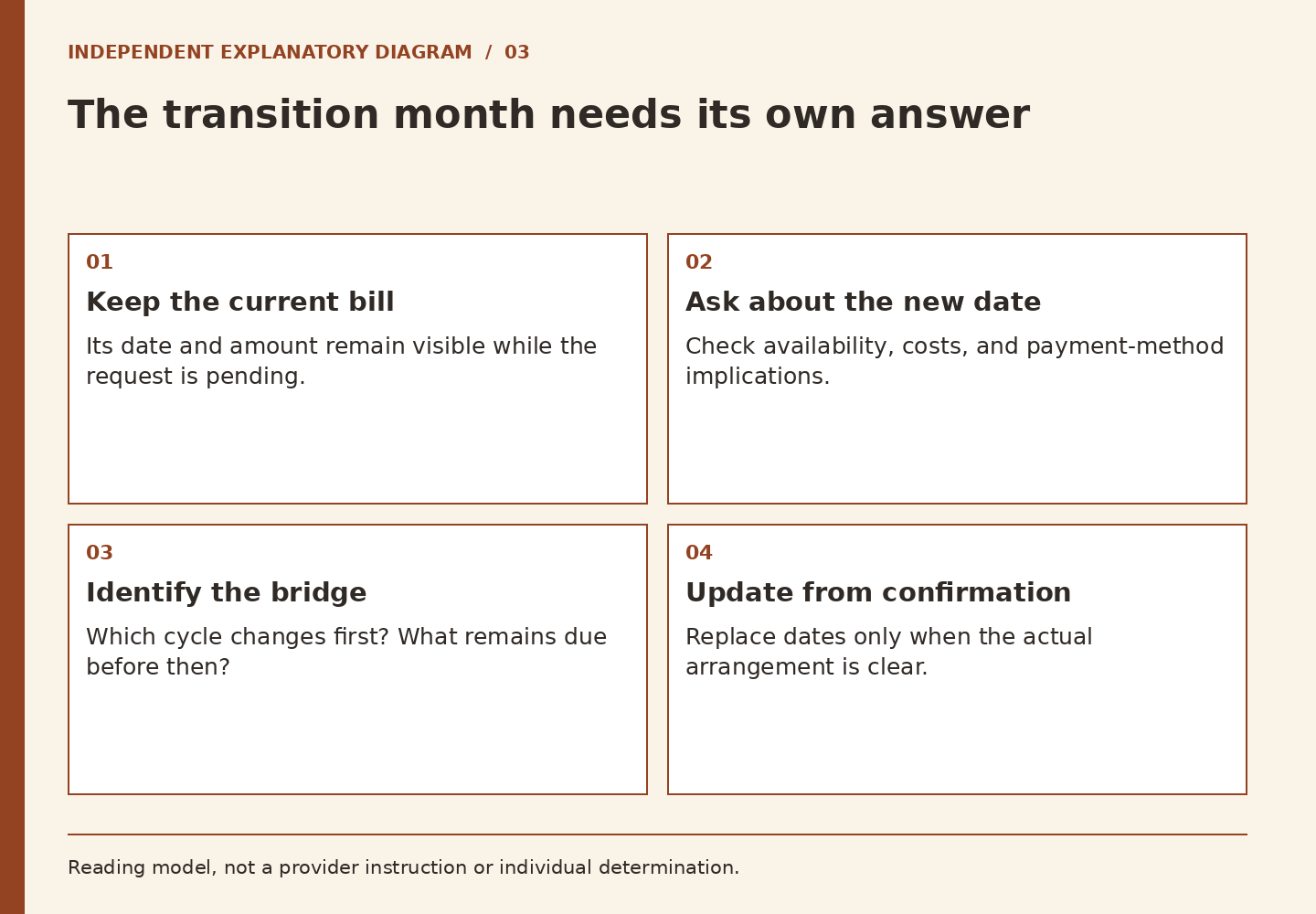
Ask about the bridge between schedules
Ask the biller whether a change is available, when it would take effect, and what must still be paid under the current schedule. Ask whether the billing period, first changed amount, payment-method settings, or any charges would differ. Do not assume that changing a date also changes an automatic payment instruction. The biller or payment provider must explain how its own process works.
Keep the answer in a form you can refer to through the service’s normal channels. Your private calendar can carry a short summary such as “new date applies beginning with the next statement; current bill unchanged,” but only if that is what the biller actually confirmed. A submitted request, an acknowledgment, and an approved change are different states.
Keep the old obligation visible until superseded
Leave the current due date in place while a request is pending. If an answer arrives that is incomplete or contradictory, ask for clarification rather than choosing the interpretation that gives you the most time. If you cannot meet the current obligation, explain that promptly to the biller and ask about available arrangements. This exercise does not suspend payment requirements.
Once the change is confirmed, update every relevant reminder: the due date, the earlier decision date, and any household note about reserved money. If another adult helps manage the calendar, explain exactly which cycle changed. Remove stale duplicates so the old reminder does not prompt an unintended second payment or make the household think two separate bills are due.
Review the first changed cycle against the confirmation you received. Was the amount expected? Did the new date actually reduce the timing squeeze? Are further questions necessary? A successful date change is more than a yes from the biller. It is a schedule the household can understand and follow through the transition without losing track of an existing obligation.
Sources and reading boundaries
Sources checked October 7, 2026. This is a review date, not a policy effective date or an account test.
- CFPB: Request a change in your bill due date: Preparing a bill schedule and a request for a due-date change. A request is not approval. Reader must confirm current biller terms, costs, effective cycle, and transitional payments. Review basis: Official PDF text reviewed, six pages.